
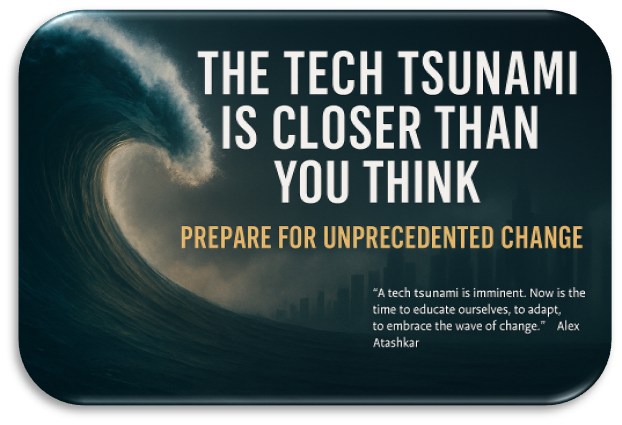
Tech Tsunami: How AI, Quantum, and Crypto Are Rewriting Reality
Introduction
Ever feel like the future is arriving a little faster than you can handle? Like you’re trying to assemble IKEA furniture with instructions written in Klingon? You’re not alone. We’re smack-dab in the middle of a technological tsunami, a confluence of groundbreaking advancements in Artificial Intelligence (AI), Quantum computing, and Cryptocurrencies, and it’s fundamentally reshaping everything we know.
Forget incremental changes. This isn’t about a slightly faster phone or a marginally better toaster. We’re talking about a paradigm shift, a rewriting of the rules across industries, economies, and even our understanding of what’s possible. Sounds dramatic? Maybe. But stick with me, because understanding this wave is crucial to not just surviving, but thriving in the years to come.
Explanation of the Problem
So, what’s causing this tech tsunami? Let’s break it down:
AI: The Intelligent Infiltration
AI is no longer just a buzzword. It’s rapidly evolving from a futuristic fantasy to an integral part of our daily lives. From the algorithms that curate your social media feed to the AI powering self-driving cars, its reach is expanding exponentially.
- Short-Term Impact: Think optimized processes, personalized experiences, and increased efficiency. We’re already seeing AI automate mundane tasks in businesses, leading to cost savings and increased productivity. Imagine AI-powered customer service bots handling routine inquiries, freeing up human agents to focus on complex issues. Healthcare is also being revolutionized, with AI assisting in diagnosis, drug discovery, and personalized treatment plans.
- Long-Term Impact: The potential here is staggering. We could see AI designing new drugs, creating new forms of art, and even solving some of the world’s most pressing problems, like climate change and poverty. However, the long-term also brings concerns about job displacement, algorithmic bias, and the ethical implications of increasingly autonomous systems.
Quantum Computing: The Superpower Unleashed
Quantum computing is like upgrading from a horse-drawn carriage to a warp drive. Traditional computers use bits, which are either 0 or 1. Quantum computers use qubits, which can be 0, 1, or both simultaneously, thanks to the wonders of quantum mechanics. This allows them to perform calculations that are impossible for even the most powerful classical computers.
- Short-Term Impact: While still in its early stages, quantum computing is already showing promise in areas like materials science, drug discovery, and financial modeling. Imagine designing new materials with unparalleled properties or optimizing investment strategies with unprecedented accuracy.
- Long-Term Impact: The potential is mind-blowing. Quantum computing could revolutionize fields like cryptography, breaking existing encryption algorithms and necessitating entirely new approaches to data security. It could also accelerate scientific discovery, leading to breakthroughs in areas like clean energy, medicine, and artificial intelligence itself.
Crypto: The Decentralized Revolution
Cryptocurrencies and blockchain technology are challenging traditional financial systems by offering decentralized, secure, and transparent alternatives. Bitcoin may be the name everyone knows, but the underlying blockchain technology has far-reaching implications.
- Short-Term Impact: We’re seeing cryptocurrencies being used for cross-border payments, secure transactions, and as a store of value. Blockchain is also being used to improve supply chain management, verify identities, and create new forms of digital ownership. Think about tracking the journey of your coffee beans from the farm to your cup using blockchain, ensuring fair trade practices and transparency.
- Long-Term Impact: Cryptocurrencies could fundamentally reshape the financial landscape, potentially leading to the creation of decentralized financial systems that are more accessible and equitable. Blockchain could revolutionize industries beyond finance, enabling secure and transparent data management, supply chain optimization, and new forms of digital governance.
Solutions
So, how do we navigate this wave of technological change? Here are some practical steps you can take:
- Embrace Lifelong Learning: The most crucial skill in this era is the ability to learn and adapt. Invest in yourself by taking online courses, attending workshops, and reading books and articles on AI, quantum computing, and crypto. Platforms like Coursera, edX, and Udacity offer excellent resources for learning these technologies.
- Example: If you’re in marketing, take a course on AI-powered marketing automation tools. If you’re in finance, explore blockchain technologies and their potential applications.
- Experiment and Explore: Don’t just read about these technologies; experiment with them. Sign up for a free trial of an AI-powered tool, explore a blockchain application, or even buy a small amount of cryptocurrency. Hands-on experience is invaluable.
- Example: Create a simple chatbot using an AI platform like Dialogflow or experiment with building a decentralized application (dApp) using blockchain development tools.
- Focus on Human Skills: As AI automates more routine tasks, the demand for uniquely human skills like creativity, critical thinking, empathy, and complex problem-solving will increase. Hone these skills by engaging in activities that challenge you creatively, intellectually, and emotionally.
- Example: Participate in brainstorming sessions at work, take a creative writing class, or volunteer for a cause you care about.
- Stay Informed and Engaged: Keep up with the latest developments in AI, quantum computing, and crypto by following reputable news sources, blogs, and industry experts. Engage in discussions and share your thoughts on social media and online forums.
- Example: Subscribe to newsletters from leading tech publications, follow thought leaders on Twitter, and join relevant LinkedIn groups.
- Be Ethical and Responsible: As these technologies become more powerful, it’s crucial to consider their ethical implications. Advocate for responsible development and deployment of AI, quantum computing, and crypto to ensure they benefit society as a whole.
- Example: Support organizations that are working to address bias in AI algorithms, promote responsible data privacy practices, and develop ethical guidelines for the use of these technologies.
Alternative Approaches:
- For the Skeptic: Start small. Focus on one area that interests you and learn the basics. Don’t feel pressured to become an expert overnight. A gradual approach can be more sustainable and less overwhelming.
- For the Entrepreneur: Identify opportunities to apply these technologies to solve real-world problems. Develop innovative products or services that leverage the power of AI, quantum computing, or crypto.
- For the Corporate Leader: Invest in training and development programs to equip your employees with the skills they need to navigate this changing landscape. Foster a culture of experimentation and innovation to encourage the adoption of new technologies.
Conclusion
The tech tsunami is undoubtedly disruptive, but it also presents unprecedented opportunities. By embracing lifelong learning, experimenting with new technologies, and focusing on uniquely human skills, we can not only survive but thrive in this new era. This isn’t just about technology; it’s about shaping a future that is more innovative, equitable, and sustainable.
The power to navigate this tech tsunami lies within each of us. It’s time to embrace the challenge, learn, adapt, and create a future where technology empowers us all. So, take a deep breath, dive in, and let’s ride this wave together. The future is being written now, and you have a pen in your hand. What will you write?