
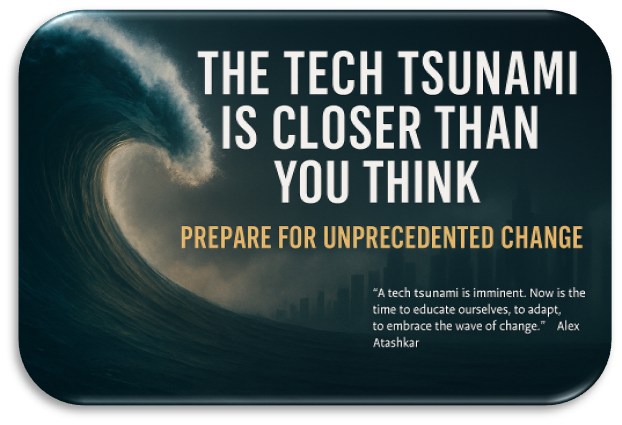
Tech Tsunami: What’s Coming Will Change Everything.
Introduction
Ever feel like you’re standing on a beach, watching a wave build on the horizon, knowing it’s going to be massive but not quite grasping how much it’ll change the landscape? That’s how it feels in the tech world right now. We’re not just talking about incremental updates or slightly faster gadgets; we’re staring down a full-blown tech tsunami that’s about to reshape… well, pretty much everything.
This isn’t just hype. We’re on the cusp of changes so fundamental they’ll redefine how we work, live, and even interact with each other. So, what’s causing this surge? Think artificial intelligence maturing at an exponential rate, the relentless expansion of the Internet of Things (IoT), the growing importance of data privacy, and the ever-blurring lines between the physical and digital worlds, among other things.
Ready to dive in? Let’s explore the leading edge of this wave, see what’s getting soaked, and figure out how to ride it.
The Short-Term Impact: Ripples You Can Already Feel
The immediate impact of this tech surge is already apparent. Businesses are scrambling to adopt AI-powered tools for everything from customer service to data analysis. If you’ve interacted with a chatbot recently, that’s the tip of the iceberg. AI is becoming embedded in our daily routines, often invisibly, streamlining processes and automating tasks that once required human intervention.
Think about marketing. Instead of broad, generic campaigns, AI algorithms can now analyze customer data to create highly personalized messages, increasing conversion rates and customer engagement. Companies like Netflix have been using AI for years to recommend shows and movies based on viewing habits, contributing significantly to user retention.
Another visible trend is the proliferation of IoT devices. From smart thermostats that learn your preferences to wearable devices that track your health metrics, the interconnected world is becoming increasingly intertwined with our daily lives. This offers unprecedented convenience and data-driven insights, but also raises serious questions about privacy and security. Imagine the potential for data breaches or misuse of personal information gathered by these devices – that’s a real and present concern.
The Long-Term Vision: A Radically Different World
Looking further down the line, the tech tsunami promises (or threatens, depending on your perspective) a more profound transformation.
- The Future of Work: Prepare for a world where AI handles repetitive tasks, freeing up humans to focus on creativity, strategy, and complex problem-solving. This isn’t just about robots replacing factory workers; it’s about AI augmenting and transforming roles across every industry. Think of doctors using AI to diagnose diseases more accurately or architects leveraging AI to design sustainable buildings. While this creates opportunities for new skills and career paths, it also necessitates a significant shift in education and workforce training to equip people with the skills needed to thrive in this new landscape.
- The Metaverse and Immersive Experiences: The lines between the physical and digital worlds are blurring. The metaverse, a persistent, shared virtual world, is poised to revolutionize how we socialize, work, and entertain ourselves. Imagine attending a concert with friends from around the globe in a virtual space, or collaborating with colleagues on a project using holographic models. While the metaverse is still in its early stages, the potential for immersive experiences is immense.
- Hyper-Personalization: With the vast amounts of data being generated, businesses will be able to personalize products and services to an unprecedented degree. Imagine clothes that are tailored to your exact measurements and style preferences, or medical treatments that are designed specifically for your genetic makeup. This level of personalization promises greater convenience, efficiency, and effectiveness, but also raises ethical questions about data privacy and algorithmic bias.
Navigating the Tech Tsunami: Practical Solutions
So, how do we navigate this wave of technological change? Here are some practical strategies:
- Embrace Lifelong Learning: The skills that are in demand today may be obsolete tomorrow. Commit to continuous learning and development to stay ahead of the curve. Consider online courses, workshops, and certifications in areas like AI, data analytics, cybersecurity, and digital marketing. The goal is to remain adaptable and evolve with the changing demands of the workplace.
- Strengthen Your Soft Skills: While technical skills are important, don’t neglect the “human” skills that are essential for success in a rapidly changing world. Focus on developing your communication, critical thinking, creativity, and problem-solving abilities. These skills are less susceptible to automation and will be highly valued in the future of work.
- Prioritize Data Privacy and Security: As technology becomes more pervasive, it’s more important than ever to protect your personal data and ensure your online security. Use strong passwords, enable two-factor authentication, be cautious about sharing personal information online, and stay informed about the latest cybersecurity threats.
- Ethical Considerations: Be mindful of the ethical implications of technology. As AI becomes more powerful, it’s crucial to address issues such as algorithmic bias, data privacy, and the potential for job displacement. Support organizations and initiatives that are working to promote responsible and ethical technology development.
- Experiment and Adapt: Don’t be afraid to try new technologies and experiment with different approaches. The tech landscape is constantly evolving, so it’s important to be adaptable and willing to embrace change. Look at competitors and other industries for examples of successful tech implementation. Consider small-scale trials before large-scale investments.
Alternative Approaches: Choosing the Right Path
Not every solution fits every situation. Here are a few alternative approaches to consider:
- Focus on Niche Markets: Instead of trying to compete with large corporations in broad markets, focus on serving niche markets with specialized products or services. This allows you to differentiate yourself and cater to specific customer needs.
- Partnerships and Collaboration: Collaborate with other organizations to leverage their expertise and resources. This can help you accelerate innovation, expand your reach, and reduce your risk.
- Open Source Solutions: Consider using open-source software and technologies, which can be more affordable and customizable than proprietary solutions. This also allows you to benefit from the collective knowledge and contributions of the open-source community.
Riding the Wave: An Optimistic Outlook
The tech tsunami might seem daunting, but it also presents incredible opportunities. By embracing lifelong learning, prioritizing ethical considerations, and experimenting with new approaches, we can not only survive but thrive in this rapidly changing world.
Think of it as a call to action. This isn’t about passively observing the wave; it’s about grabbing a board and learning to surf. This means actively engaging with new technologies, experimenting with different approaches, and adapting to the evolving demands of the future. The possibilities are endless. The time to prepare is now. Let’s ride this wave together and shape a future where technology empowers us all.