
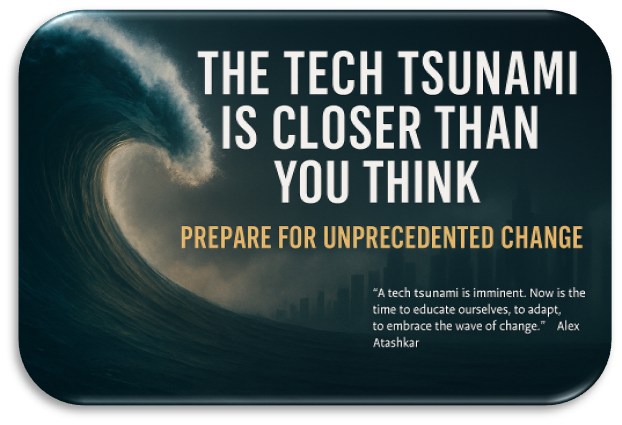
Tech Tsunami: What You Need to Know Now
Introduction
The ground is shifting.Beneath our feet, a silent but powerful wave is building, reshaping the landscape of our careers, our businesses, and even our daily lives.It’s the “Tech Tsunami,” and it’s not about to break – it’s already crashing all around us.
We’re not talking about a sudden wipeout.This is a gradual, but relentless surge of technological advancements, from the rise of AI to the pervasiveness of automation, that’s fundamentally altering how we work, learn, and interact.Feeling overwhelmed?You’re not alone.But understanding the wave, and learning how to ride it, is crucial to not just surviving, but thriving.
Think of it this way: Imagine being a blacksmith in the age of the automobile.Ignoring the combustion engine wouldn’t make it disappear.You’d either adapt, learn to repair cars, or risk becoming a footnote in history.This “Tech Tsunami” demands a similar response.So, let’s dive in and see what’s creating these waves and how you can navigate them.
The Short-Term Impacts: Feeling the First Ripples
The immediate impact of this tech surge is already being felt across various sectors.Let’s break down some key areas:
- Job Displacement (and Creation): This is the elephant in the room.Automation is streamlining processes, leading to the elimination of some roles, particularly those involving repetitive tasks.Call centers are increasingly using AI chatbots, and warehouses are deploying robotic arms.However, it’s not all doom and gloom.New roles are emerging in areas like AI development, data analysis, cybersecurity, and cloud computing.The trick is to anticipate the shift and upskill accordingly.
- Increased Demand for Digital Skills: Even if your job isn’t directly threatened by automation, digital literacy is becoming non-negotiable.From mastering project management software to understanding basic data analytics, the ability to leverage technology is a valuable asset in almost any profession.
- The Gig Economy Revolution: Technology platforms are fueling the gig economy, offering flexibility and opportunities for freelancers and independent contractors.While this provides avenues for supplemental income or even full-time self-employment, it also presents challenges related to job security and benefits.
The Long-Term Transformation: Riding the Crest of the Wave
The long-term effects of the Tech Tsunami are even more profound, shaping the future of work and society in fundamental ways:
- The Rise of the “Human + Machine” Workforce: The future isn’t about robots replacing humans entirely.It’s about humans working alongside machines, leveraging their strengths to augment our capabilities.Think of doctors using AI to diagnose diseases more accurately or architects using virtual reality to design buildings more efficiently.This collaboration will require a new set of skills that emphasize creativity, critical thinking, and emotional intelligence.
- Personalized Learning and Development: Traditional education models are struggling to keep pace with the rapid rate of technological change.The future of learning will be more personalized, adaptive, and accessible, leveraging online platforms and AI-powered tutors to cater to individual needs and learning styles.
- The Democratization of Innovation: Technology is empowering individuals and small businesses to innovate and compete on a global scale.Cloud computing, open-source software, and online marketplaces are lowering the barriers to entry, allowing anyone with a good idea and the right skills to build and launch a successful product or service.
Navigating the Tech Tsunami: Practical Solutions
Okay, so we’ve established that the Tech Tsunami is real and transformative.But how do you actually navigate it?Here are some practical steps you can take:
- Embrace Lifelong Learning: The most crucial weapon against obsolescence is a commitment to continuous learning.Identify the skills that are in demand in your industry or the areas you’re passionate about and invest in acquiring them.
- Example: Sarah, a marketing professional, noticed the growing importance of data-driven marketing.She enrolled in an online course on data analytics and learned how to use tools like Google Analytics and Tableau.As a result, she landed a new role with a higher salary and more responsibilities.
- Upskill and Reskill Strategically: Don’t just learn for the sake of learning.Focus on acquiring skills that are directly relevant to your career goals or the needs of your industry.Look for opportunities to learn new technologies, improve your communication skills, and develop your problem-solving abilities.
- Example: John, a factory worker whose job was threatened by automation, took advantage of his company’s training program to learn how to operate and maintain the new robotic equipment.He transitioned from being a manual laborer to a skilled technician, securing his job and increasing his earning potential.
- Build a Strong Network: Connect with people in your industry and beyond.Attend conferences, join online communities, and network with professionals who are working on the cutting edge of technology.These connections can provide valuable insights, opportunities, and support.
- Example: Maria, a software developer, joined a local meetup group for AI enthusiasts.Through this group, she met other developers, learned about new technologies, and found a mentor who helped her advance her career.
- Experiment and Innovate: Don’t be afraid to experiment with new technologies and approaches.Look for opportunities to automate tasks, improve processes, and create new products or services.Embrace a mindset of continuous improvement and be willing to learn from your mistakes.
- Example: David, a small business owner, started using social media automation tools to streamline his marketing efforts.This allowed him to reach a wider audience, generate more leads, and save time and money.
- Develop “Human” Skills: While technical skills are important, don’t neglect the “human” skills that are essential for success in the age of AI.These include creativity, critical thinking, emotional intelligence, communication, and collaboration.
- Example: Emily, a project manager, focused on improving her communication and leadership skills.She learned how to motivate her team, resolve conflicts effectively, and build strong relationships with stakeholders.As a result, she became a more valuable asset to her company.
Alternative Approaches: Choose Your Own Adventure
Not everyone will want to tackle the Tech Tsunami in the same way.Here are a few alternative approaches you can consider:
- The “Lean In” Approach: Embrace technology wholeheartedly, become a power user, and actively seek out opportunities to integrate it into your work and life.
- The “Strategic Adaptation” Approach: Carefully assess the potential impact of technology on your career and industry and make targeted investments in skills and knowledge that will help you stay ahead of the curve.
- The “Value-Driven” Approach: Focus on developing skills and expertise that are difficult to automate, such as creativity, critical thinking, and emotional intelligence.
Riding the Wave: A Conclusion of Optimism
The Tech Tsunami is undeniably challenging, but it also presents incredible opportunities.By embracing lifelong learning, upskilling strategically, building a strong network, and developing “human” skills, you can not only survive but thrive in this new era.
Don’t let fear paralyze you.Instead, embrace the challenge, be proactive, and take control of your future.The wave is here, and it’s time to ride it.The power to shape your destiny in the age of technology is in your hands.So, take a deep breath, adjust your stance, and get ready for an exhilarating ride!