
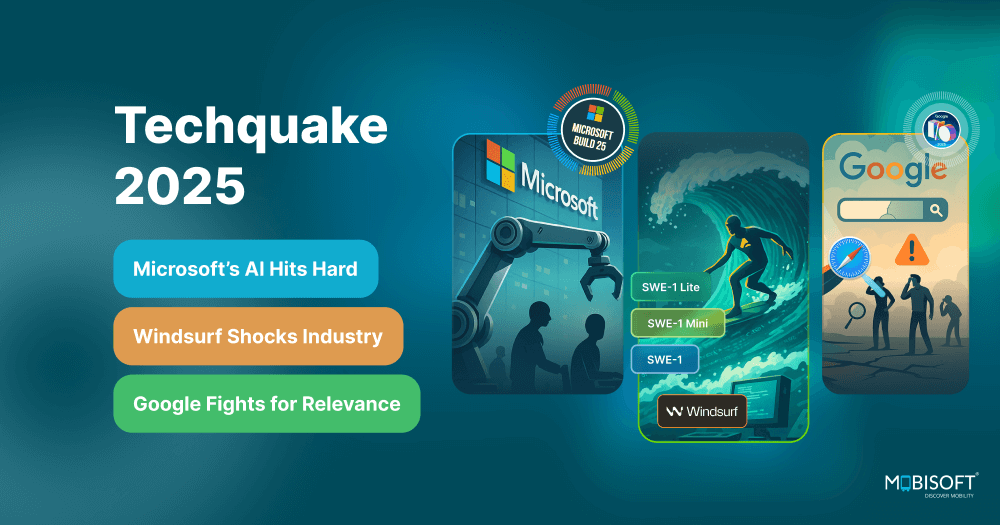
Techquake: Today’s News That Will Shake Your World
Introduction
Hold on tight, folks. The ground is rumbling. It’s not an earthquake in the traditional sense, but a “Techquake” – a seismic shift in the technological landscape happening right now, with aftershocks that will be felt for years to come. We’re talking about the convergence of artificial intelligence (AI), automation, and data analytics, and the way it’s fundamentally reshaping how we work, live, and interact with the world. Forget incremental changes; this is a full-blown revolution, and if you’re not prepared, you might get buried in the digital rubble.
Explanation of the Problem
What’s causing this Techquake? Well, think of it as the perfect storm. AI is no longer a futuristic fantasy; it’s powering everything from your Netflix recommendations to self-driving cars. Automation, driven by increasingly sophisticated algorithms, is streamlining processes and boosting efficiency in ways previously unimaginable. And the sheer volume of data we’re generating daily is providing the fuel for both AI and automation, creating a self-reinforcing cycle of innovation.
But like any powerful force, this Techquake brings both opportunities and challenges. Let’s dig into the short-term and long-term impacts, and then, most importantly, let’s explore some practical solutions so you can not only survive, but thrive, in this new reality.
The Immediate Aftershocks: Feeling the Rumble Today
The most immediate impact many are feeling is in the job market. Automation is already taking over repetitive tasks in manufacturing, customer service, and even white-collar professions like data entry and accounting. This isn’t just about robots replacing factory workers; AI-powered software can now perform tasks that once required highly trained professionals.
Think about the rise of AI-powered chatbots. Businesses are increasingly using them to handle basic customer inquiries, freeing up human agents to focus on more complex issues. While this improves efficiency and reduces costs for companies, it also means fewer jobs for customer service representatives.
This isn’t just about job displacement, though. It’s also about a shift in required skills. The demand for roles requiring creativity, critical thinking, complex problem-solving, and emotional intelligence is rising. Simultaneously, the need for purely technical skills is constantly evolving, demanding continuous learning and adaptation.
Beyond the workplace, we’re seeing AI influence everything from our shopping experiences to our healthcare. Personalized recommendations are everywhere, and algorithms are constantly learning our preferences to predict our needs. In healthcare, AI is being used to diagnose diseases, personalize treatment plans, and even develop new drugs. While these advancements offer incredible potential, they also raise concerns about data privacy, algorithmic bias, and the potential for misuse.
The Long Game: Preparing for the Future Landscape
Looking further down the road, the long-term impacts of this Techquake are even more profound. We can anticipate a radical restructuring of industries, a redefinition of work, and a fundamental shift in the way we interact with technology.
Imagine a world where personalized education is the norm, with AI tutors adapting to each student’s individual learning style and pace. Or a world where healthcare is proactive and predictive, with AI-powered sensors monitoring our health in real-time and identifying potential problems before they even manifest.
However, we must also consider the potential downsides. Widespread automation could lead to increased income inequality if the benefits are not distributed equitably. The increasing reliance on AI could erode our critical thinking skills and make us more susceptible to manipulation. And the concentration of power in the hands of a few tech giants could stifle innovation and limit individual freedom.
The key to navigating this future lies in proactive adaptation. We need to embrace lifelong learning, develop new skills, and adapt our thinking to the changing demands of the digital age.
Solutions
Building Your Shelter: Practical Solutions for a Shaken World
So, how do you prepare for this Techquake? Here are a few practical solutions you can implement today:
- Embrace Lifelong Learning: The most crucial step is to become a lifelong learner. Identify the skills that are in demand and invest in developing those skills through online courses, workshops, and even formal education. Platforms like Coursera, Udemy, and edX offer a vast array of courses on topics ranging from AI and data science to digital marketing and project management.
- Example: A former accountant, seeing the rise of AI-powered accounting software, took online courses in data analytics and now works as a financial analyst, leveraging his accounting knowledge with data-driven insights.
- Develop “Human” Skills: While technical skills are important, don’t neglect the skills that are uniquely human: creativity, critical thinking, communication, collaboration, and emotional intelligence. These are the skills that AI cannot easily replicate and that will be increasingly valuable in the future.
- Example: A software developer, realizing the importance of communication, joined a Toastmasters club to improve his public speaking skills and is now a more effective team leader and presenter.
- Explore Entrepreneurship: The Techquake is also creating new opportunities for entrepreneurs. Identify a problem that can be solved with technology and build a business around it. The barriers to entry are lower than ever before, thanks to cloud computing, open-source software, and online marketplaces.
- Example: Two college students, seeing the need for more personalized fitness training, developed an AI-powered fitness app that adapts to each user’s individual needs and goals.
- Upskill and Reskill Programs: A lot of companies and governments are starting to invest in upskilling and reskilling programs. Look for the ones that provide you with the skills you need to stay competitive in the job market.
- Stay Informed and Engaged: Keep up-to-date with the latest technological trends and engage in discussions about their impact on society. This will help you understand the challenges and opportunities ahead and make informed decisions about your future.
- Example: Subscribe to newsletters from leading technology publications, attend industry conferences, and participate in online forums.
- Advocate for Ethical AI: As AI becomes more pervasive, it’s crucial to advocate for its ethical development and deployment. Support policies that promote transparency, accountability, and fairness in AI systems. This will help ensure that AI benefits all of society, not just a select few.
- Example: Join a non-profit organization that is working to promote ethical AI, or write to your elected officials to express your concerns about the potential risks of AI.
Alternative Approaches: Find What Fits You
Not every solution works for everyone. Here are a few alternative approaches to consider:
- Focus on niche skills: Instead of trying to master everything, focus on developing expertise in a specific area. This can make you a highly sought-after specialist.
- Embrace remote work: Remote work offers flexibility and allows you to access job opportunities from anywhere in the world. This can be especially valuable in areas where there are limited local opportunities.
- Consider a career change: If your current job is at high risk of automation, consider a career change to a field that is more resistant to automation.
- Build a portfolio: Showcase your skills and experience by building a portfolio of projects. This can be especially helpful if you’re looking to break into a new field.
Conclusion
The Silver Lining: A Future We Can Shape
The Techquake is undoubtedly disruptive, but it also presents incredible opportunities. By embracing lifelong learning, developing “human” skills, exploring entrepreneurship, and advocating for ethical AI, we can not only survive this seismic shift but also shape the future in a way that benefits all of humanity.
The future is not something that happens to us; it’s something we create. So, let’s get to work, build our shelters, and emerge from this Techquake stronger, more resilient, and more innovative than ever before. The ground may be shaking, but the foundation for a brighter future is being laid right now. Take a deep breath, learn, adapt, and remember: you have the power to navigate this new world and thrive. The future is waiting to be built, and it’s waiting for you.