
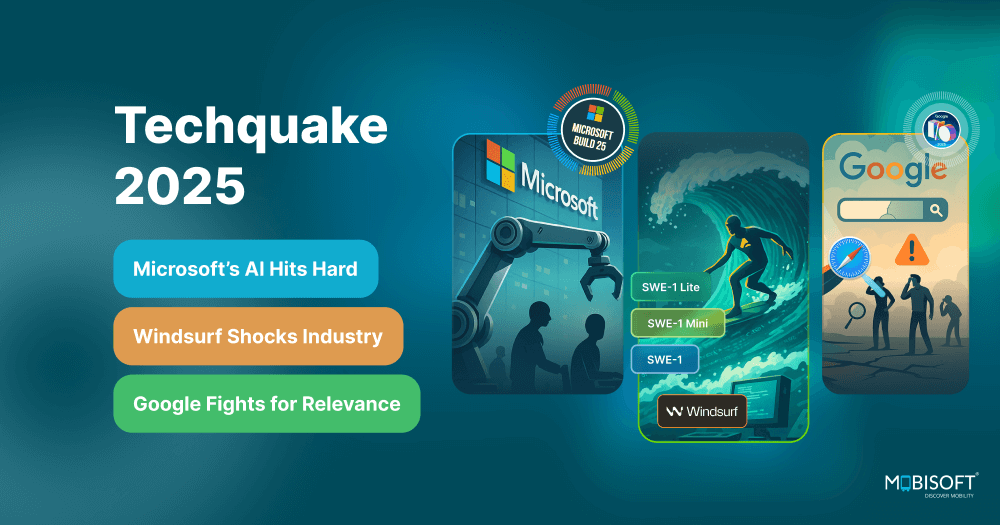
Techquake:The Future Just Trembled.
Introduction
Okay,let’s be honest.You’ve probably seen headlines predicting the future of tech approximately 7,482 times this year alone.But hear me out.This isn’t another listicle of vaporware promises.This is about something bigger,something more fundamental.This is about a potential “Techquake”–a seismic shift happening right now that could reshape everything from how we work to how we live.
We’re not talking about the metaverse hype train (though that might contribute a little tremor).We’re talking about the convergence of several disruptive technologies–AI,quantum computing,advanced robotics,and decentralized systems–all maturing at an unprecedented pace.Individually,they’re powerful.Combined?They could trigger a chain reaction that fundamentally alters our reality.
Think of it like this:the earth’s tectonic plates had been grinding for centuries before the Big One hit San Francisco.We’ve been tinkering with these technologies for decades,but now they’re reaching a critical mass.Are we ready for the aftershocks?Let’s dive in.
The Short-Term Shudders: What’s Already Shaking?
The immediate impact is already rippling through the job market.Automation,fueled by AI,is rapidly changing the skill sets required in almost every industry.We’re seeing it in manufacturing,customer service,even in traditionally “safe” white-collar jobs like data entry and basic legal research.This isn’t just about robots replacing factory workers;it’s about AI algorithms augmenting (or even replacing) tasks previously performed by humans across the board.
Look at the rise of AI-powered copywriting tools.Suddenly,junior marketers need to adapt and learn how to leverage these tools effectively,rather than solely relying on their own writing skills.Similarly,in the financial sector,algorithms are increasingly handling tasks like fraud detection and risk assessment,demanding a new level of analytical and technical skills from finance professionals.
This presents both a threat and an opportunity.The threat,of course,is widespread job displacement.But the opportunity lies in upskilling and reskilling,adapting to the new landscape and becoming proficient in the technologies that are driving the change.
Furthermore,the ethical implications of these technologies are becoming increasingly urgent.From biased algorithms perpetuating societal inequalities to deepfakes eroding trust in information,we need robust ethical frameworks to guide the development and deployment of these powerful tools.The recent debates surrounding generative AI art are a prime example,highlighting the need for clear guidelines on copyright,intellectual property,and artistic integrity.
The Long-Term Tsunami: What Could Be Washed Away?
Looking further down the line,the potential impact is even more profound.Quantum computing,while still in its early stages,promises to revolutionize fields like medicine,materials science,and cryptography.Imagine designing new drugs and materials at the molecular level with unparalleled precision,or breaking the encryption that currently secures our digital world.
Advanced robotics,combined with AI,could lead to a world where physical labor is largely automated,freeing up humans to pursue more creative and intellectually stimulating endeavors.This could lead to a post-scarcity economy,where resources are abundant and readily available.
However,this also raises fundamental questions about the nature of work,the distribution of wealth,and the very meaning of life.If machines can do almost anything,what will humans do?How will we ensure that the benefits of this technological revolution are shared equitably?Will we embrace a future of leisure and creativity,or will we succumb to widespread unemployment and social unrest?
Decentralized systems,like blockchain,could reshape governance and finance,empowering individuals and communities and reducing the power of centralized institutions.Imagine a world where voting is secure and transparent,where financial transactions are instantaneous and borderless,and where individuals have greater control over their own data and privacy.
But these systems also present new challenges.Decentralization can be chaotic and difficult to manage.The lack of central authority can make it difficult to address issues like fraud and security breaches.And the anonymity afforded by some decentralized systems can be exploited by criminals and terrorists.
Building Earthquake-Resistant Structures: Practical Solutions for a Shifting World
So,how do we navigate this technological earthquake?How do we mitigate the risks and harness the opportunities?Here are a few practical solutions:
- Invest in Lifelong Learning:The single most important thing you can do is to commit to continuous learning and development.Identify the skills that are in demand in your industry and invest in training and education to acquire those skills.Online courses,workshops,and apprenticeships are all great options.Platforms like Coursera,edX,and Udemy offer a vast array of courses covering everything from AI and data science to blockchain and cybersecurity.
- Example:A marketing professional could take a course on AI-powered content creation to learn how to leverage tools like Jasper or Copy.ai.
- Embrace Adaptability:Be open to change and willing to adapt to new technologies and workflows.Develop a growth mindset,focusing on learning and improvement rather than fixed abilities.Cultivate your problem-solving skills and your ability to think critically and creatively.
- Example:A customer service representative could embrace the introduction of AI chatbots by focusing on handling more complex customer issues that require human empathy and problem-solving skills.
- Focus on Human Skills:While technology is rapidly automating many tasks,there are certain skills that remain uniquely human.These include critical thinking,creativity,communication,empathy,and leadership.Develop these skills to differentiate yourself in the job market and to contribute value in ways that machines cannot.
- Example:A software engineer could focus on developing strong communication and collaboration skills to effectively work in agile teams and to communicate complex technical concepts to non-technical stakeholders.
- Advocate for Ethical AI:Support the development and implementation of ethical guidelines for AI.Demand transparency and accountability from AI developers and policymakers.Educate yourself and others about the potential biases and risks of AI.
- Example:Join a professional organization like the IEEE (Institute of Electrical and Electronics Engineers) or the ACM (Association for Computing Machinery) and participate in discussions and initiatives related to AI ethics.
- Support Inclusive Education and Training Programs:Advocate for policies that promote access to education and training for all members of society,regardless of their background or socioeconomic status.Support programs that provide reskilling and upskilling opportunities for displaced workers.
- Example:Volunteer your time to mentor students or provide career guidance to individuals who are looking to transition into tech-related fields.
- Experiment with Decentralized Technologies:Explore the potential of blockchain and other decentralized systems.Participate in decentralized communities and learn about the benefits and challenges of these technologies.
- Example:Set up a cryptocurrency wallet and experiment with buying and selling cryptocurrencies.Participate in a decentralized autonomous organization (DAO) and learn about the governance mechanisms of these organizations.
Alternative Approaches: Finding What Works for You
No single solution fits everyone.Depending on your individual circumstances,you may need to take a different approach.Consider these alternative approaches:
- Focus on a Niche:Instead of trying to master everything,focus on a specific niche within a particular technology.For example,instead of trying to become an expert in all of AI,focus on natural language processing or computer vision.
- Become a Translator:Develop the ability to bridge the gap between technical experts and non-technical stakeholders.Become someone who can translate complex technical concepts into plain language and help organizations understand the potential benefits and risks of new technologies.
- Start a Business:Identify a problem that can be solved using new technologies and start a business that provides a solution.This is a high-risk,high-reward strategy,but it can be a great way to create value and make a positive impact on the world.
The Future is Now (And It’s Not All Doom and Gloom!)
The “Techquake” is happening,and it’s reshaping the world around us.But this isn’t a reason to panic.It’s an opportunity to adapt,to learn,and to build a better future.By investing in ourselves,advocating for ethical technology,and embracing new possibilities,we can navigate this technological upheaval and emerge stronger on the other side.
The future isn’t something that happens to us.It’s something we create.So,let’s roll up our sleeves,get to work,and build a future that we can all be proud of.The ground is shaking,yes,but we have the tools and the ingenuity to build earthquake-resistant structures that can withstand the test of time.Now is the time to learn,adapt,and contribute to a future where technology empowers us all.Are you ready to build?