
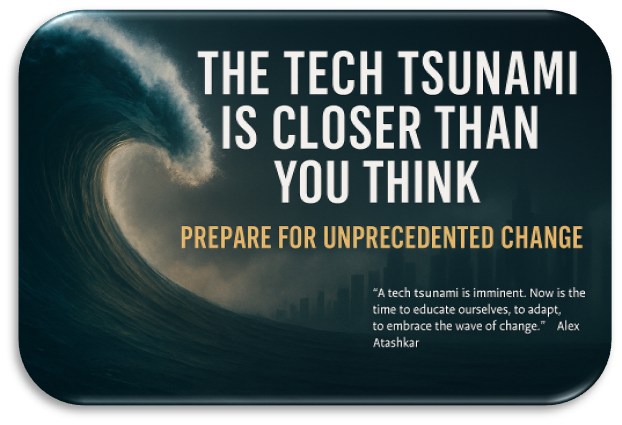
Tech Tsunami: What’s Coming Will Change Everything
Introduction
Ever felt like you’re standing on a beach, enjoying the calm water, when suddenly you spot a massive wave building on the horizon? That’s kind of what the current tech landscape feels like. A “Tech Tsunami” is brewing, and it’s not a question of if it will hit, but when and how drastically it will reshape our lives. We’re not talking about a minor ripple here; this is about tectonic shifts in how we live, work, and interact with the world. Feeling overwhelmed? Don’t be. This isn’t about fear-mongering; it’s about understanding the forces at play and preparing to ride the wave. So, let’s dive in and unpack what this Tech Tsunami entails, its potential impact, and most importantly, how we can navigate it successfully.
The Rising Tide: Defining the Tech Tsunami
What exactly is this “Tech Tsunami”? It’s not just one single technology, but a convergence of several rapidly evolving fields: Artificial Intelligence (AI), specifically generative AI, the Internet of Things (IoT), Blockchain technology, Quantum Computing and the Metaverse/Extended Reality. Each of these technologies is powerful in its own right, but their combined force is exponentially greater.
Think of AI automating tasks previously thought impossible, IoT creating interconnected ecosystems in our homes and cities, Blockchain revolutionizing finance and supply chains, Quantum Computing solving problems that are currently intractable, and the Metaverse blurring the lines between the physical and digital worlds. Together, they are creating a perfect storm of technological disruption.
Short-Term Splashes: Immediate Impacts We’re Already Seeing
The first waves of this Tech Tsunami are already breaking. We’re seeing them in:
- Job Market Disruption: AI-powered automation is reshaping job roles, leading to both displacement in some sectors and the creation of new, specialized roles in others. Think of customer service agents being augmented by chatbots or data analysts needing skills in AI model interpretation.
- Personalized Experiences: AI is powering highly personalized experiences in e-commerce, entertainment, and even healthcare. Netflix’s recommendations, Spotify’s tailored playlists, and personalized medicine are all early examples.
- Cybersecurity Threats: As technology becomes more sophisticated, so do the threats. AI is being used to develop more sophisticated cyberattacks, requiring equally sophisticated defenses.
- Rise of the Creator Economy: Platforms like YouTube, TikTok, and Patreon, fueled by readily accessible technology, have empowered individuals to create and monetize content, leading to a boom in the creator economy.
Long-Term Submersion: The Future We’re Building
Looking further out, the Tech Tsunami has the potential to fundamentally alter society:
- Transformation of Healthcare: AI-powered diagnostics, personalized medicine, and robotic surgery could revolutionize healthcare, leading to earlier diagnoses, more effective treatments, and longer lifespans. Imagine AI analyzing medical images with greater accuracy than human doctors or robots performing complex surgeries with pinpoint precision.
- Smart Cities and Infrastructure: IoT devices and data analytics could create smart cities that are more efficient, sustainable, and livable. Think of traffic lights that adjust in real-time to optimize traffic flow, smart grids that distribute energy more efficiently, and sensors that monitor air quality and water usage.
- Decentralized Finance (DeFi): Blockchain technology could democratize finance, making it more accessible, transparent, and efficient. DeFi platforms could offer alternatives to traditional banking services, such as lending, borrowing, and trading, without the need for intermediaries.
- The Metaverse and Immersive Experiences: The Metaverse could create entirely new ways to interact, learn, and work. Imagine attending a virtual concert with friends from around the world, collaborating with colleagues on a 3D project in a shared virtual space, or learning a new language through immersive simulations.
- Ethical Considerations and Societal Impact: These advancements also raise significant ethical concerns, including data privacy, algorithmic bias, job displacement, and the potential for misuse. Addressing these challenges will be critical to ensuring that the Tech Tsunami benefits all of humanity.
Navigating the Waves: Practical Solutions for a Changing World
So, how do we prepare for and navigate this Tech Tsunami? Here are some practical solutions:
- Embrace Lifelong Learning: The most crucial skill in the age of rapid technological change is the ability to learn and adapt. Invest in continuous learning, whether through online courses, workshops, or on-the-job training. Focus on developing skills that are likely to remain in demand, such as critical thinking, problem-solving, creativity, and emotional intelligence.
- Example: Platforms like Coursera, Udemy, and edX offer a vast range of courses on emerging technologies, from AI and Blockchain to data science and cybersecurity.
- Upskilling and Reskilling: Identify the skills that are becoming obsolete and actively acquire new skills to remain relevant in the job market. Many companies are investing in reskilling programs to help their employees adapt to new roles.
- Case Study: Amazon’s Upskilling 2025 program provides employees with access to training in high-demand fields, such as cloud computing and machine learning.
- Foster Collaboration: Technological advancements often require collaboration across different disciplines. Work with experts in different fields to develop innovative solutions and address complex challenges.
- Example: In the healthcare industry, collaboration between doctors, data scientists, and engineers is essential for developing AI-powered diagnostic tools.
- Promote Ethical Development and Deployment: Advocate for ethical guidelines and regulations that govern the development and deployment of new technologies. This includes addressing issues such as data privacy, algorithmic bias, and job displacement.
- Example: The European Union’s Artificial Intelligence Act aims to establish a legal framework for AI that promotes innovation while mitigating risks.
- Build Digital Resilience: Develop resilience in the face of technological disruptions. This includes diversifying your skills, building strong professional networks, and staying informed about emerging trends.
- Example: Participating in industry conferences, joining professional organizations, and networking with peers can help you stay ahead of the curve.
- Explore Alternative Approaches
- Focus on Human-Centered Design: Emphasize the human element in technological solutions by prioritizing user experience, accessibility, and inclusivity to ensure technologies are designed for real needs.
- Community Engagement and Feedback Loops: Actively involve communities in the development and deployment of new technologies through continuous feedback loops to adapt solutions to real-world scenarios.
A Call to Action: Riding the Wave with Confidence
The Tech Tsunami is undoubtedly a disruptive force, but it also presents immense opportunities for innovation, progress, and societal transformation. By understanding the forces at play, embracing lifelong learning, fostering collaboration, and promoting ethical development, we can navigate this wave with confidence and create a future that benefits all of humanity.
This isn’t a time to be fearful, but to be proactive. Start exploring these technologies, identify areas where you can upskill, and engage in discussions about the ethical implications. The future isn’t something that happens to us; it’s something we create. Let’s ride this Tech Tsunami together and shape a future that is both technologically advanced and human-centered. The wave is coming, are you ready to surf?