
Tomorrow’s Code: Rewrite Everything
Introduction
Ever feel like you’re wading through mud when working on a legacy codebase? Like every line of code you touch is a potential landmine waiting to explode? You’re not alone. Many developers face the daunting reality that their systems, built years ago on outdated technologies and evolving requirements, are creaking under their own weight. The question isn’t if things will break, but when and how spectacularly.
This isn’t just about personal frustration; it’s a business problem. We’re talking about slowed innovation, increased maintenance costs, security vulnerabilities, and ultimately, a competitive disadvantage. The world moves fast, and your technology needs to keep pace. But the mere thought of untangling that spaghetti code can be enough to paralyze even the most seasoned engineer.
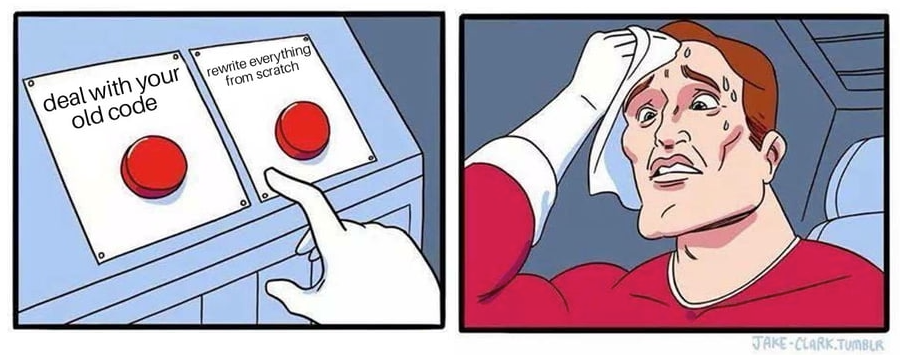
So, what do we do? Do we keep patching and praying, hoping the system holds together a little longer? Or do we bite the bullet and consider… rewriting everything? The idea sounds terrifying, I know. But hear me out. It might be the bravest – and smartest – thing you can do for the future of your business.
Explanation of the Problem
The Price of Perpetual Patching
Let’s be real: maintaining legacy systems is expensive, both in terms of money and opportunity cost. The short-term fixes, the workarounds, the “temporary” solutions that become permanent fixtures – they all add up.
- Technical Debt: This is the big one. Every time you choose a quick fix over a proper solution, you’re accumulating debt. Like financial debt, it accrues interest in the form of increased complexity, reduced maintainability, and higher risk of failure.
- Security Risks: Older systems are often vulnerable to known exploits that newer technologies have addressed. Patching these vulnerabilities can be a constant cat-and-mouse game, and a single missed patch could be catastrophic. Remember the Equifax breach? That stemmed from a known vulnerability in an older system.
- Developer Frustration & Attrition: Let’s not forget the human cost. Working with outdated technology is demotivating. Talented developers want to learn new things and build innovative solutions, not wrestle with code written before they were even born. This can lead to high turnover, further compounding the problem.
- Innovation Stalled: Time spent patching and maintaining legacy systems is time not spent building new features, exploring new markets, or staying ahead of the competition. Your business risks falling behind as others leverage newer technologies to deliver better products and services.
In the long term, clinging to legacy systems is a recipe for obsolescence. You’re essentially building your future on a foundation of quicksand.
Solutions
The Rewrite Option: A Deep Dive
Okay, so you’re convinced things are bad. But is a complete rewrite really the answer? It’s a big decision, with significant risks and rewards.
When to Consider a Rewrite:
- The Cost of Maintenance Exceeds the Cost of a Rewrite: Do the math. Factor in developer hours, downtime, security risks, and opportunity cost. If maintaining the existing system is consistently costing you more than a rewrite estimate, it’s time to seriously consider your options.
- The Architecture is Fundamentally Flawed: If the system’s core architecture is outdated or poorly designed, no amount of patching will fix it. A rewrite allows you to build a solid foundation from the ground up.
- You Need to Adopt New Technologies: If you need to integrate with modern APIs, cloud platforms, or other cutting-edge technologies, a rewrite might be the only way to do it effectively.
- The System is a Single Point of Failure: If a critical system is fragile and prone to failure, a rewrite can improve reliability and resilience.
Rewrite Strategies: Not All Rewrites Are Created Equal
There are several ways to approach a rewrite, each with its own advantages and disadvantages:
- The Big Bang Rewrite: This involves completely replacing the old system with the new one in a single, dramatic switchover.
- Pros: Potentially faster development time.
- Cons: Extremely risky. Any unforeseen issues can lead to prolonged downtime and significant business disruption. This approach is generally not recommended for critical systems.
- The Incremental Rewrite (Strangler Fig Pattern): This involves gradually replacing parts of the old system with new components, one piece at a time. The new system slowly “strangles” the old one until it’s eventually gone.
- Pros: Lower risk, less disruption, allows you to validate the new system incrementally.
- Cons: Can be more complex to manage, requires careful planning and coordination.
- Example: A large e-commerce company migrating from a monolithic architecture to microservices. They started by rewriting the order management system, then the product catalog, and so on, until the entire monolith was replaced.
- The Parallel Run: Running the old and new systems side-by-side for a period of time. Data is replicated between the two systems, allowing you to compare their performance and identify any issues before fully switching over.
- Pros: High confidence in the new system, minimal disruption.
- Cons: More resource-intensive, requires careful data synchronization.
- The “Last Mile” Rewrite: Focus on rewriting only the parts of the system that are causing the most pain or are preventing you from adopting new technologies. This can be a good option when a full rewrite isn’t feasible.
- Pros: Targeted improvement, lower cost, faster time to value.
- Cons: May not address underlying architectural issues.
Practical Considerations: Making the Rewrite a Success
Rewriting a system is a complex undertaking, but with careful planning and execution, you can significantly increase your chances of success.
- Define Clear Goals and Objectives: What problem are you trying to solve? What are the key metrics you’ll use to measure success? Be specific and measurable.
- Assemble a Strong Team: You’ll need experienced developers, architects, and project managers who understand both the old and the new technologies.
- Choose the Right Technology Stack: Select technologies that are well-suited to your needs, scalable, and maintainable. Consider factors like community support, vendor lock-in, and long-term viability.
- Embrace Agile Development: Use iterative development cycles to build and test the new system in small, manageable increments. This allows you to get feedback early and often, and make adjustments as needed.
- Automate Everything: Automate testing, deployment, and monitoring to reduce errors and speed up the development process.
- Communicate, Communicate, Communicate: Keep stakeholders informed throughout the process. Transparency builds trust and helps to manage expectations.
- Don’t Forget the Data: Migrating data from the old system to the new one can be one of the most challenging aspects of a rewrite. Plan your data migration strategy carefully and test it thoroughly.
- Monitor and Iterate: Once the new system is live, monitor its performance closely and make adjustments as needed. Continuous improvement is key.
Case Study: The Netflix Transformation
Netflix provides a compelling example of a successful rewrite. They famously migrated from a monolithic architecture hosted in their own data centers to a microservices architecture hosted on AWS. This allowed them to scale their service to handle millions of users, improve reliability, and innovate more quickly. The transition wasn’t overnight; it was a multi-year effort that involved careful planning, incremental changes, and a lot of hard work. But the results speak for themselves.
Conclusion
Rewriting everything isn’t a decision to be taken lightly. It’s a challenging but potentially transformative undertaking. By carefully assessing your situation, choosing the right approach, and executing your plan effectively, you can unlock a future of innovation, agility, and competitive advantage.
It’s time to stop being held hostage by your legacy systems. Embrace the challenge, rewrite your code, and build a future you can be proud of. The future is yours to code.