
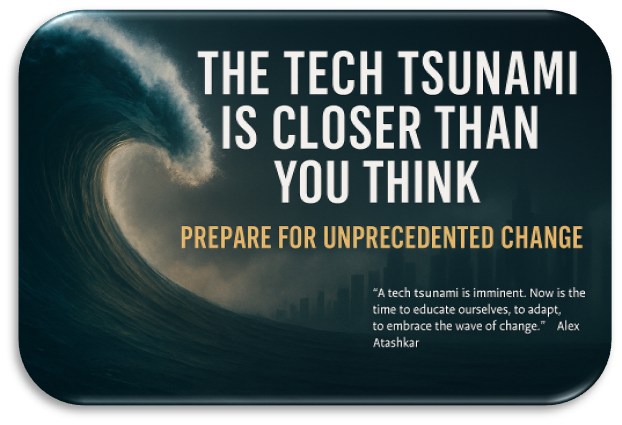
Tech Tsunami: What You Need to Know Now
Introduction
Ever feel like you’re paddling furiously just to stay afloat in a sea of constant tech updates? You’re not alone. We’re living through a veritable tech tsunami, a relentless wave of innovation, disruption, and frankly, a bit of overwhelm. From AI chatbots writing essays to the metaverse vying for our attention, it’s a lot to process. But don’t panic! This article is your survival guide, helping you navigate this deluge and not just survive, but thrive. We’ll break down the short and long-term impacts, offer practical solutions, and leave you feeling empowered, not drowning.
The Immediate Impact: Feeling the Swell
Let’s face it, the immediate impact of this tech surge is often…chaos. It’s the constant software updates that always seem to happen at the worst time. It’s the pressure to learn new platforms, algorithms, and acronyms that pop up seemingly overnight. It’s the fear of your skills becoming obsolete.
- Information Overload: One of the biggest immediate challenges is simply the sheer volume of information. New technologies are launched daily, each promising to revolutionize our lives and businesses. Sifting through the hype to find what’s truly valuable can feel like an impossible task.
- Skills Gap: The rapid pace of technological advancement creates a growing skills gap. Many individuals and businesses struggle to keep up with the skills required to effectively utilize new technologies. This can lead to decreased productivity, missed opportunities, and increased anxiety about job security.
- Security Risks: As technology becomes more complex, so do the security risks. Cyberattacks are becoming more sophisticated and frequent, posing a significant threat to individuals and businesses alike. Staying ahead of these threats requires constant vigilance and a commitment to cybersecurity best practices.
- Ethical Concerns: The rise of technologies like AI raises complex ethical questions. How do we ensure that AI systems are fair, unbiased, and used responsibly? These are critical questions that require careful consideration and ongoing dialogue.
The Long Game: Riding the Wave to the Future
While the immediate impact can feel overwhelming, the long-term implications of this tech tsunami are potentially transformative. Think of it less as a threat and more as a powerful wave you can learn to ride.
- Increased Efficiency and Productivity: Automation, AI, and other technologies have the potential to significantly increase efficiency and productivity across a wide range of industries. This can lead to lower costs, faster turnaround times, and improved quality.
- New Opportunities: The tech tsunami is creating entirely new industries and job roles. From AI developers to data scientists to metaverse architects, there’s a growing demand for skilled professionals who can harness the power of new technologies.
- Enhanced Communication and Collaboration: Technology is breaking down geographical barriers and making it easier than ever to communicate and collaborate with people around the world. This can lead to increased innovation, greater diversity, and more inclusive workplaces.
- Improved Quality of Life: From personalized medicine to smart homes to sustainable energy solutions, technology has the potential to improve our quality of life in countless ways.
Navigating the Tech Tsunami: Practical Solutions
Okay, enough doom and gloom (and optimistic forecasting!). Let’s get down to brass tacks. How can you actually navigate this tech tsunami and come out on top? Here are some practical solutions:
- Embrace Lifelong Learning: The key to staying relevant in the face of rapid technological change is to embrace lifelong learning. Commit to continuously updating your skills and knowledge. This could involve taking online courses, attending workshops, reading industry publications, or simply experimenting with new technologies.
- Example: A marketing manager who feels overwhelmed by the constant changes in social media algorithms could take an online course on digital marketing or attend a workshop on the latest social media trends.
- Focus on Fundamentals: While it’s important to stay up-to-date on the latest technologies, don’t forget the fundamentals. Strong communication skills, critical thinking abilities, and problem-solving skills will always be in demand.
- Example: A software developer who is constantly learning new programming languages should also focus on developing their problem-solving skills and ability to work effectively in a team.
- Develop a Strategic Approach to Technology: Don’t just adopt new technologies for the sake of it. Develop a strategic approach that aligns with your goals and priorities. Identify the technologies that are most relevant to your needs and focus your efforts on mastering them.
- Example: A small business owner who is looking to improve customer service could invest in a CRM system and train their staff on how to use it effectively.
- Prioritize Cybersecurity: In today’s digital landscape, cybersecurity is paramount. Implement strong passwords, use two-factor authentication, and be wary of phishing scams. Invest in cybersecurity training for yourself and your employees.
- Example: A business could hire a cybersecurity consultant to conduct a security audit and recommend measures to protect their data and systems.
- Seek Mentorship and Collaboration: Don’t try to navigate the tech tsunami alone. Seek mentorship from experienced professionals who can provide guidance and support. Collaborate with others who share your interests and challenges.
- Example: A young entrepreneur could join a local tech incubator or accelerator program to connect with mentors and network with other startups.
- Embrace Experimentation and Failure: Not every new technology will be a success. Embrace experimentation and be willing to fail. Learn from your mistakes and use them as opportunities to improve.
- Example: A company could allocate a small portion of its budget to experimenting with new technologies and encourage employees to share their learnings, even if the experiments don’t always yield positive results.
Alternative Approaches: Tailoring Your Strategy
Not every solution works for every person or business. Here are some alternative approaches to consider:
- Outsourcing: Instead of trying to learn every new technology yourself, consider outsourcing certain tasks to experts. This can free up your time to focus on your core competencies.
- Example: A small business could outsource its IT support to a managed service provider.
- Automation: Automate repetitive tasks to free up your time and improve efficiency. This can be done using a variety of tools, from simple scripts to sophisticated AI-powered platforms.
- Example: A marketing team could automate its social media posting using a scheduling tool.
- Community and Education: Look for training and resources within your industry or community. Trade associations, local colleges, and online forums often offer valuable learning opportunities.
- Example: A freelance photographer could join a local photography club to learn new techniques and network with other photographers.
Conclusion: Ride the Wave!
The tech tsunami is here to stay. But instead of being overwhelmed, see it as an opportunity. By embracing lifelong learning, developing a strategic approach to technology, prioritizing cybersecurity, and seeking mentorship and collaboration, you can not only survive but thrive in this rapidly changing world. Remember to focus on the fundamentals, experiment fearlessly, and tailor your strategy to your unique needs.
The future is being written in code, powered by algorithms, and shaped by innovation. Get involved! Embrace the challenge, learn to ride the wave, and help shape the future. The tech tsunami isn’t a threat; it’s a chance to build something amazing. So, grab your surfboard and get ready to ride!